
What is Art Therapy?
A creative, gentle, and research-supported path to emotional healing and self-understanding.
Art therapy is a specialized form of psychotherapy that uses creative expression to support reflection, emotional processing, healing, and personal growth.
It blends the fields of psychology and the arts to help people improve their mental, emotional, physical, and spiritual well-being.
Art therapists are trained clinicians who guide clients through creative processes using materials such as drawing, painting, clay, collage, movement, writing, and music.
These creative methods become tools for communication, regulation, insight, and transformation — especially when words are not enough.
“Art therapy is a broad term with deep roots. When properly facilitated, it can draw on our innate creativity to help us heal, grow, and transform.”
- Canadian Art Therapy Association
Why Art Therapy Works
Creativity is a language — and it often speaks more clearly than words.
Through colour, shape, rhythm, and movement, clients can express inner experiences that feel difficult to articulate verbally. Research shows that art therapy fosters:
-
feelings of participation and connection
-
dignity and independence
-
emotional safety
-
self-fulfillment
-
insight and integration
Art therapy is not about artistic skill. It’s about using creativity as a doorway into clarity, emotional balance, and self-expression.
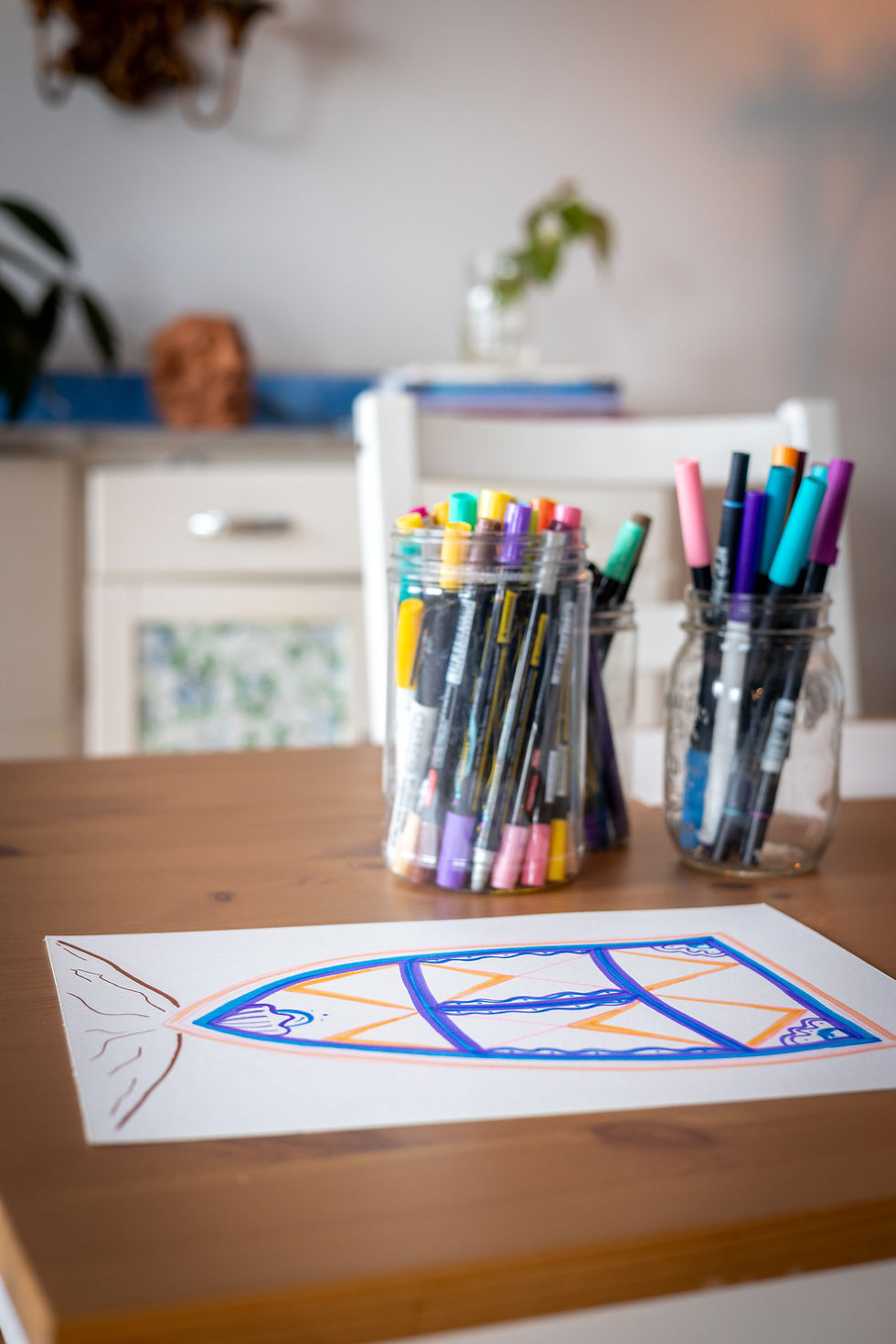

What Art Therapy Really Looks Like
When people hear “art therapy,” they often think of arts & crafts.
But the work is much deeper than that.
In art therapy, art means creativity of all kinds:
Draw • paint • sculpt • stitch
Dance • sing • write • bead
Build • engineer • DJ • deconstruct • explore
Here, creativity becomes a bridge between your inner world and your outer experience — a way to explore feelings, fears, dreams, and insights safely and playfully.
Benefits of Combining Art + Psychotherapy
Art therapy supports clients by helping them:
Make the invisible visible
Give form to emotions, thoughts, and experiences that feel hard to express.
Build emotional literacy
Use colour, shape, and symbolism to understand and regulate feelings.
Self-regulate through the creative process
Art-making supports nervous system regulation and reduces overwhelm.
Co-regulate in relationship
Non-verbal expression helps build trust and emotional safety.
Experience fuller self-expression
Creativity allows space for authenticity, confidence, and clarity.
Access deeper insights
Symbolism and imagery help surface subconscious knowledge.
Engage in hands-on meaning-making
Art becomes a tool for exploring challenges and rehearsing solutions.
Create art as an exercise in creating life
What you practice in art — grounding, experimenting, expressing — becomes what you practice in everyday life.
Who Is Art Therapy For?
Everyone is creative — and everyone can benefit from art therapy.
No art experience is required.
Art therapy is available in-studio, online, or at home, making it accessible to a wide range of clients.
Children (5+) & teens
Adults & seniors
People of all abilities, backgrounds, and identities
Anyone curious about self-expression, emotional regulation, or personal growth
Clients navigating stress, anxiety, depression, burnout, trauma, grief, life transitions
People with or without psychotherapy insurance coverage
Basic art materials (pencils, markers, paper) are all you need. Additional supplies can be provided or mailed at cost.

What to Expect in a Session
Each session is personalized and integrates both creative and therapeutic processes.
The focus is not creating a perfect (or imperfect!) product.
It’s about connection, process, reflection, and insight.
Art therapy encourages presence, grounding, and curiosity—helping shift attention from past or future worries into the “OKness” of the present moment.
Example of a 60-Minute Art Therapy Session
Check-in
20 min
-
Draw a shape that reflects how you’ve been feeling
-
Celebrate progress since the previous session
-
Identify what you’d like to explore today
Focus
30 min
-
Discuss what’s on your mind
-
Regulate through doodling, colouring, or working with materials
-
Explore a relevant art prompt or ongoing project aligned with your goals
Check-out
20 min
-
Revisit your “feelings shape”
-
Notice shifts or insights
-
Name a commitment or intention for next time
In every session, the art has a voice — and together, we listen to what it reveals.


Art Therapy Online Across Canada and in Ottawa-Gatineau Region
On the unceded Territory of the Algonquin People
Contact
Have any questions?
Please don’t hesitate to
call at 613-316-2975
Got something to share?
Ping us at reneemichaud@sagebaytherapy.ca
Built with love by
SPLSH! creative
© 2026 Sage Bay
Art Therapy & Counselling